Various Charging Plugs For Electric Vehicles

The global electric vehicle (EV) charging pile market is experiencing robust growth, driven by the increasing adoption of electric vehicles and supportive government policies.

Expanding Market Size: The market size of the global EV charging pile industry has been on a consistent rise. According to Allied Market Research, the global electric vehicle charging station market was valued at 12.5billionin 2022andisprojectedtoreach49.8 billion by 2032, growing at a compound annual growth rate (CAGR) of 15.6% during the forecast period.
Fast-Charging Technology: There have been significant advancements in fast-charging technology, with many new charging piles supporting high-power DC fast charging. For instance, some charging piles can now recharge an electric vehicle to 80% in just 20-30 minutes.

Intelligent and Interconnected Systems: Modern charging piles are equipped with advanced software and communication technologies, enabling features like remote monitoring, real-time data analysis, and mobile app integration for users to locate and operate charging stations easily.
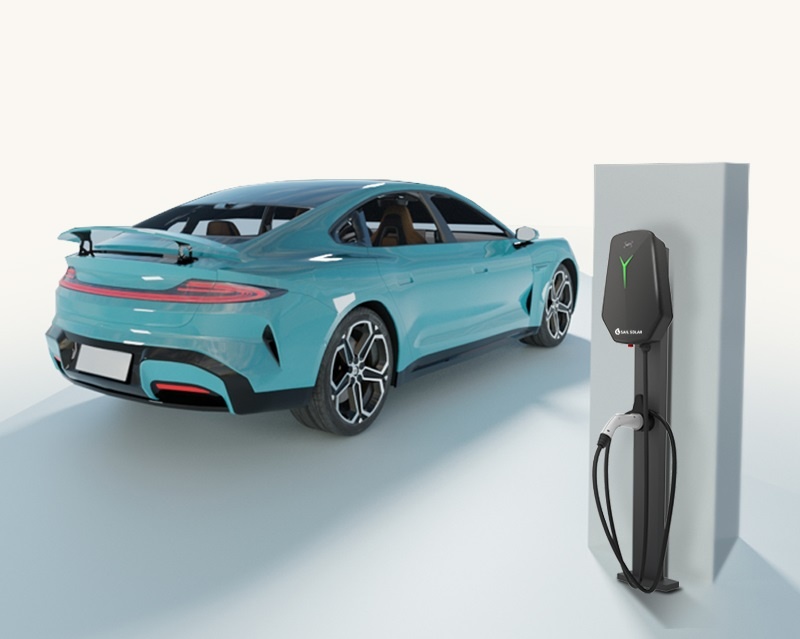

EV charging is divided into DC charging and AC charging.
DC charging:
Commonly known as "fast charging", it is fixedly installed outside the electric vehicle and connected to the AC power grid. It uses a three-phase four-wire 380v frequency stable frequency of 50HZ, and can also provide a DC power supply device for non-onboard electric vehicle power batteries.
AC charging:
It is also commonly known as "slow charging", but AC charging do not have a charging function. They must be connected to an on-board charger to charge the electric vehicle, which only plays a role in controlling the power supply.
The difference between DC charging and AC charging
Charging time: The most essential difference between slow charging and fast charging is the charging time. Generally speaking, it takes about 1.5 to 3 hours to fully charge the power battery with a DC charging pile; while it takes 8 to 10 hours to fully charge with an AC charging pile
On-board charger: If an AC charging pile charges the power battery, it needs to use the on-board charger on the car to charge it, while a DC charging pile can be charged directly, which is also the biggest difference from DC charging.

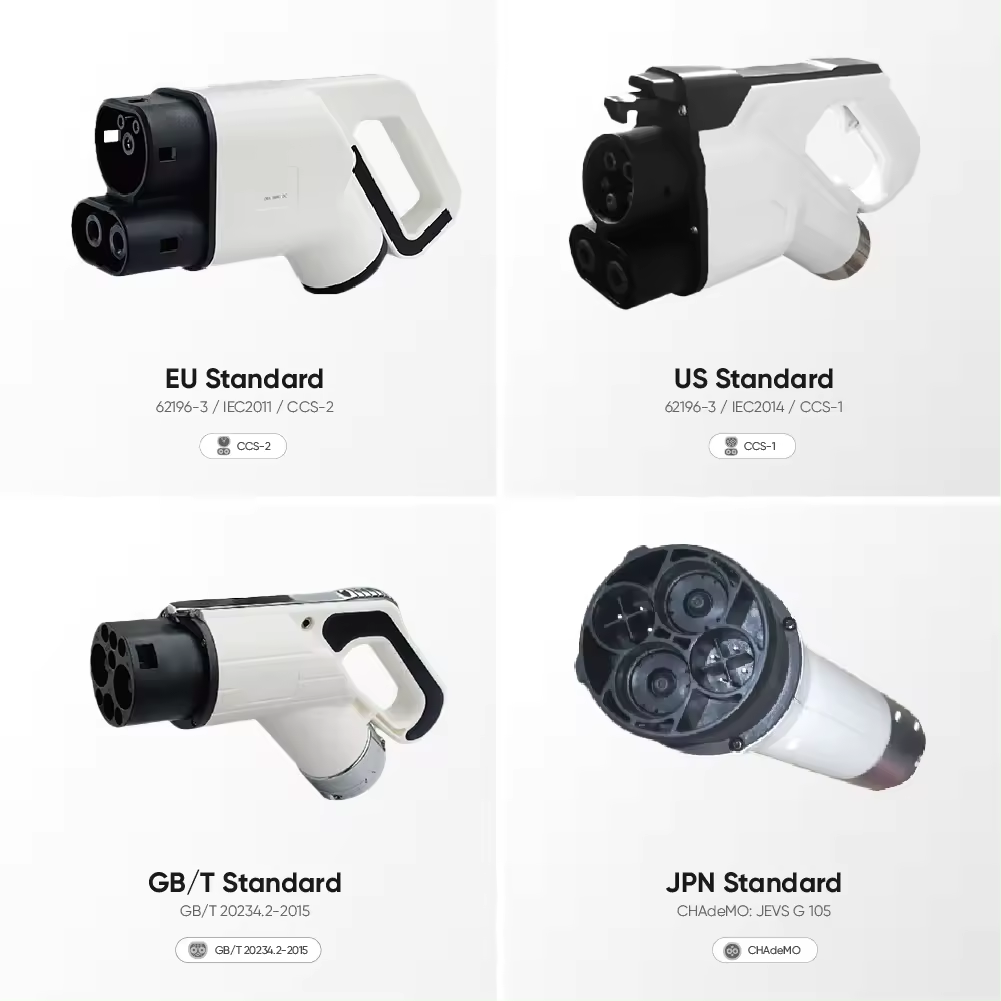
DC and AC charging plugs
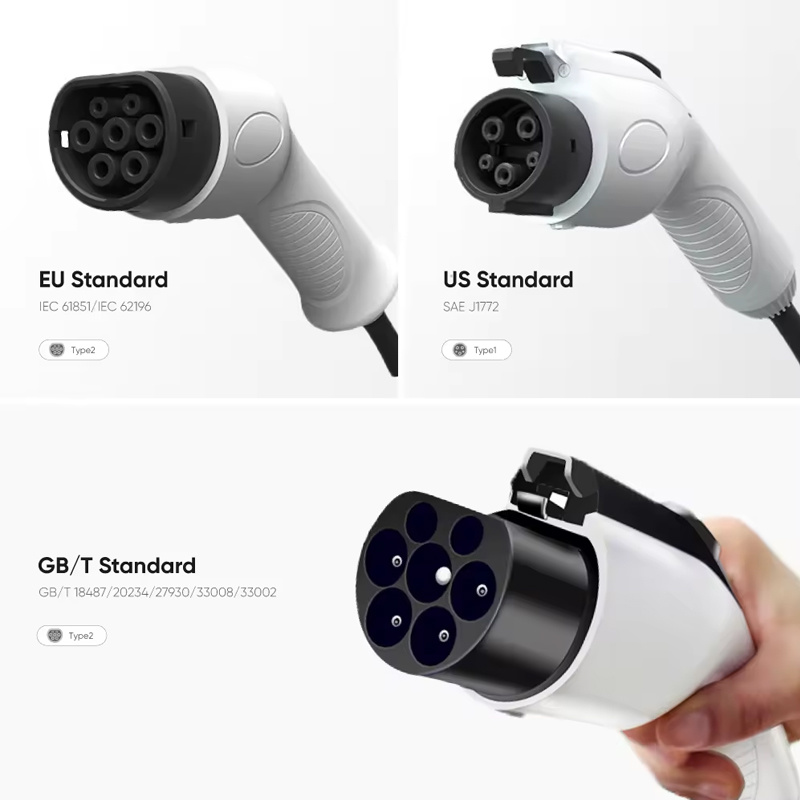
Due to the differences in charging piles, charging plugs in different countries are also divided into DC charging plugs (DC) and AC charging plugs (AC)

.
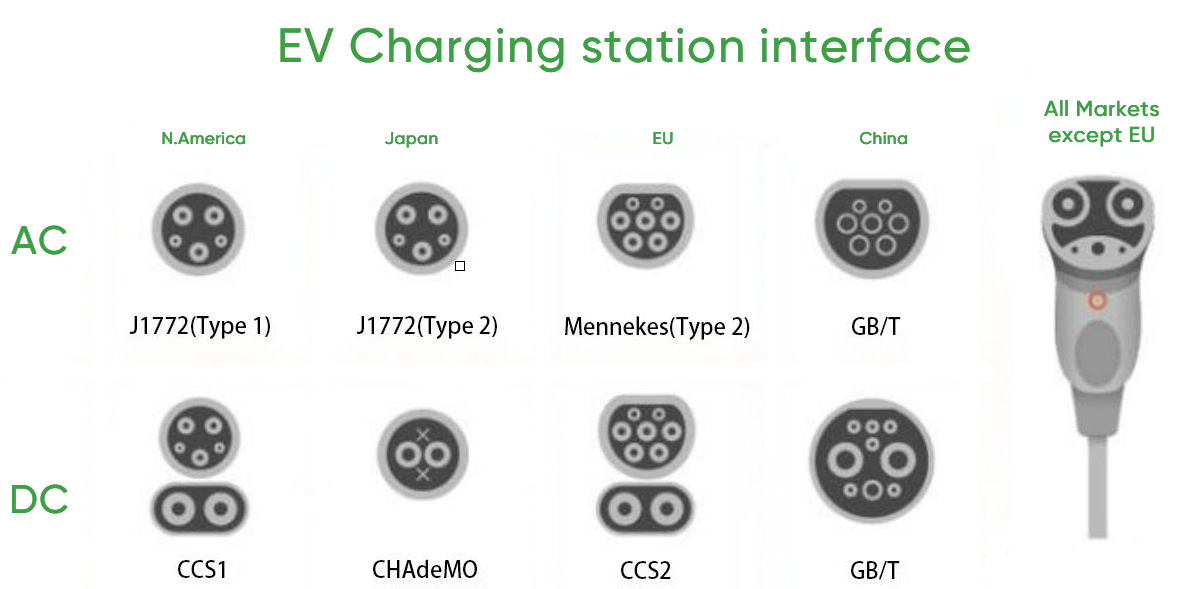


J1772
A standard electric vehicle connector produced for the United States and Japan. The plug has 5 contacts and allows charging according to the Mode 2 and Mode 3 standards for a single-phase 230 V network (maximum current 32A). This plug has a maximum charging power of 7.4 kW and is considered slow and outdated.

CCS1
The CCS Combo 1 connector is a type 1 receiver that allows the use of slow and fast charging plugs. The connector works thanks to an inverter installed in the car that converts AC to DC. Vehicles with this type of connection can increase the charging speed to a maximum "fast" charge. The CSS Combo is designed to charge 200-500 V at a current of 200 A and delivers 100 kW of power.


CHAdeMO
The CHAdeMO plug is designed for use in powerful DC charging stations in Mode 4 and can charge the battery to 80% in 30 minutes (with a power of 50 kW). It has a maximum voltage of 500 V, a current of 125 A, and a power of up to 62.5 kW. It is suitable for Japanese vehicles equipped with this connector. This is common in Japan and Western Europe.

Mennekes Type 2
The Mennekes Type 2 plug is installed on almost all European electric vehicles, as well as on Chinese electric vehicles for sale. Vehicles with this type of connector can be charged from single-phase and three-phase power grids with a maximum voltage of 400 V and a current of 63 A. The maximum power of such charging stations is 43 kW, but usually fluctuates below 22 kW for three-phase networks and below 7.4 kW for single-phase networks. Electric vehicles are charged in mode 2 and mode 3.

CCS2
An improved and backward compatible version of the CCS2 type plug. Very common in Europe. Allows fast charging with a power of up to 100 kW.

GBT
A standard plug for electric vehicles produced in China. There are also two versions: AC and DC power stations. Charging power through this connector is up to 190 kW at (250A, 750V).

Why should solar power system be installed at the optimum inclination?

Everyone knows that when installing a photovoltaic power plant, the installer will adjust the direction and install at the best inclination. So do you know why to do this? Now let’s go with Xiaobian.

1. What is the best inclination?

In a narrow sense, if the annual total radiation received by the fixed photovoltaic array on the inclined plane at the lower inclination angle is the largest, then the inclination angle is called the optimal inclination angle. The optimal inclination angle can also be the inclination angle corresponding to the highest annual generation capacity, the highest yield, the inclination angle corresponding to the highest generation capacity in a few months and the optimal inclination angle calculated under various other restrictive conditions.

Why should photovoltaic power plants be installed at the optimum inclination?


2. Why do we need the best inclination?

In order to receive more solar radiation, it is necessary to obtain an optimum inclination angle from the annual radiation receipt, which is the optimum inclination angle.

3. How to calculate the optimum inclination angle?

According to the radiation data, longitude and latitude, the annual total radiation receipts of photovoltaic square arrays with different inclination angles are calculated and accumulated, and the maximum inclination angle of annual total radiation is selected as the optimum inclination angle.

4. What are the main factors affecting the optimum inclination angle?

The main influencing factors of the optimum inclination angle include: (1) latitude and latitude will affect the variation characteristics of the solar altitude angle, thus affecting the optimum inclination angle; (2) monthly radiation distribution, if more radiation is concentrated in the month with high solar altitude angle in a year, the optimum inclination angle will increase, and vice versa; and (3) direct radiation has directivity, while scattering radiation will decrease. Radiation isotropy, so their respective proportion in total radiation also has a certain impact on the optimal dip angle.

5. Does the photovoltaic power station generate the highest power at the optimum tilt angle?

For the narrow optimal dip angle, according to the order of “Design Code for Photovoltaic Power Plants”, the best dip angle is determined first (without considering the mutual occlusion between the arrays at this time), and then the North-South distance of the photovoltaic array is determined according to the dip angle. When the distance is determined, there will be shadow occlusion between the front and back photovoltaic arrays. At this time, the radiation of the inclined plane and the power generation of the power station will be affected by the distance. Because of the dynamic determination of dip angle and dip angle, there will be a little difference between the dip angle of maximum power generation and the optimal dip angle, but unless there are other restrictions, the difference between them will not be too large.

6. Is the profit of photovoltaic power plant the highest under the optimal inclination?

For the narrow sense of the best inclination is not, sometimes less than the best inclination of a certain angle has higher returns. Optimal inclination means high radiation reception, but it also means large area. For example, in a limited field area, with the decrease of the optimal inclination angle, the installed capacity will continue to improve. Lower tilt angle will reduce power generation, while higher installed capacity will increase power generation. Therefore, it is necessary to make further technical and economic comparisons with external conditions to determine the ultimate income at which tilt angle.

7. Is the best inclination absolute?

No, because of climate uncertainty, the optimal dip can only be called the relative optimal dip based on historical data. Firstly, different historical radiation data will lead to different optimal dip angles. There are some differences between the best dip angles calculated by historical 10-year data and by historical 20-year data. Secondly, historical average data represent a greater possibility of local radiation characteristics, but for a certain year, it is not necessarily the best choice.


Believe that you have seen the above content to understand why the installation of photovoltaic power plants in accordance with the best inclination installation reasons, if you have other questions, please call for advice.